Design System for Scale.
Evolving a Markets Design Toolkit across 166+ financial products.
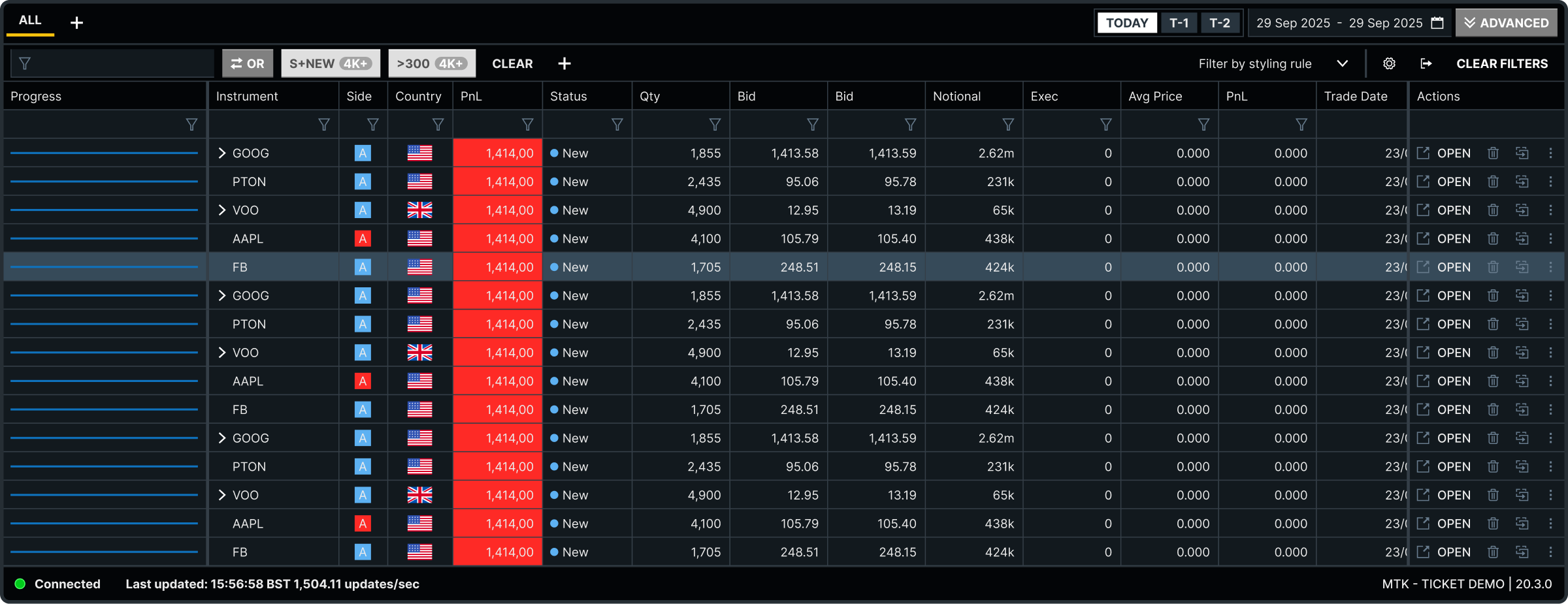
The problem
One of the world's largest investment banks operates a vast ecosystem of internal and client-facing tools, from pricing blotters and trading tickets to dashboards used by global sales and operations teams.
Each vertical has its own priorities and technical realities, but they all depend on a shared foundation to keep design and engineering aligned across a fast-moving, highly regulated environment.
When the firm began migrating its design system from Sketch to Figma, I joined the Design Systems team to help translate, refine, and scale that foundation, ensuring it remained stable, consistent, and genuinely usable across dozens of interconnected products.

What I did
The challenge wasn't to create a new system, it was to rebuild trust in an existing one during a major tooling migration.
The Markets design system was already well established, but moving it into Figma required more than simply converting files. Figma's component architecture offered new capabilities, variants, constraints, auto-layout, but also exposed gaps in flexibility and naming logic that had accumulated over time.
My goal was to stress-test and strengthen the system: identify where components broke under real-world use, improve interaction patterns, and ensure teams across the globe could adopt it confidently without slowing down delivery.
As we tested components in real product layouts, we discovered where patterns needed to adapt, from accessibility improvements to visual clarity across Markets applications.
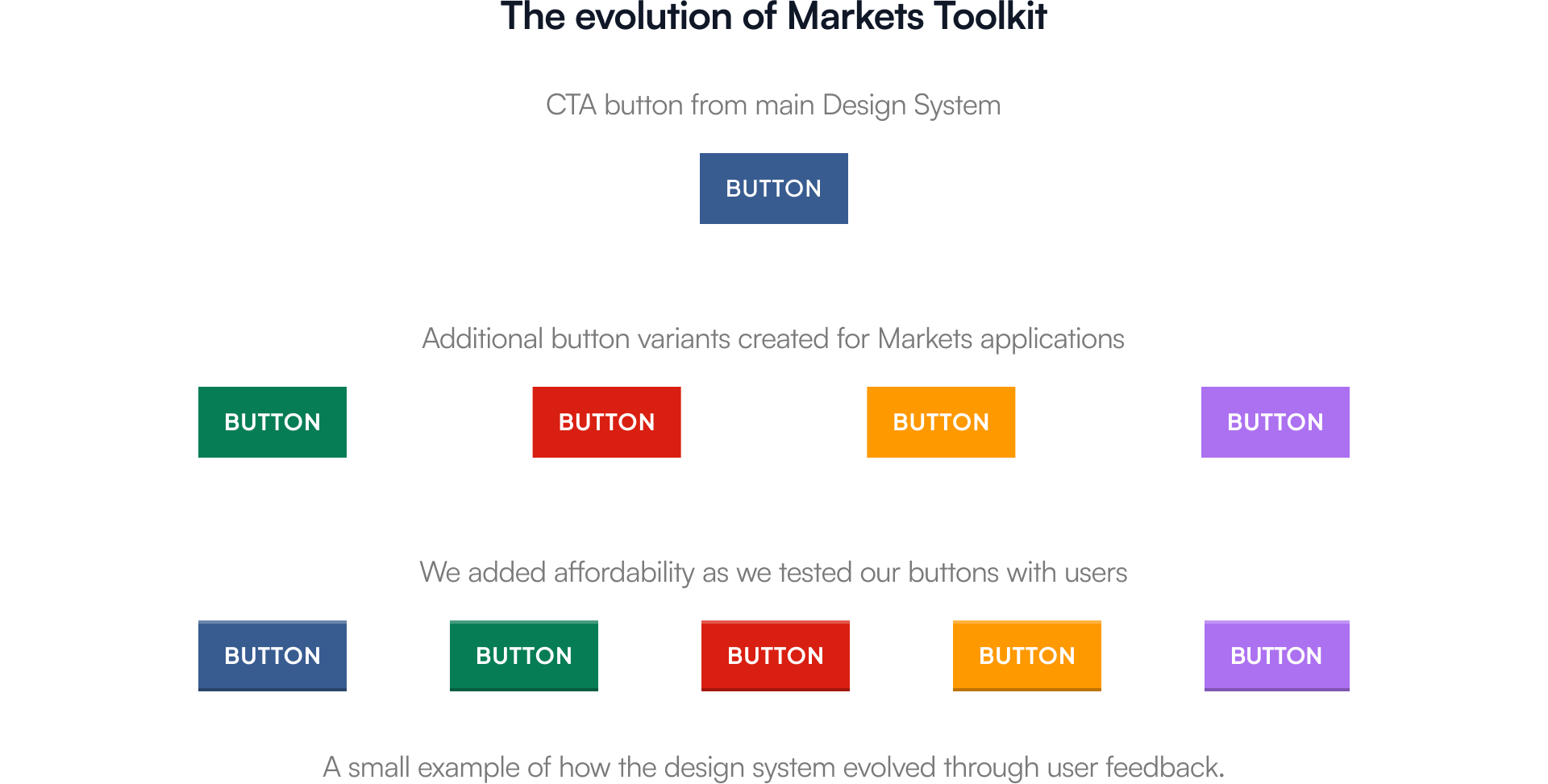
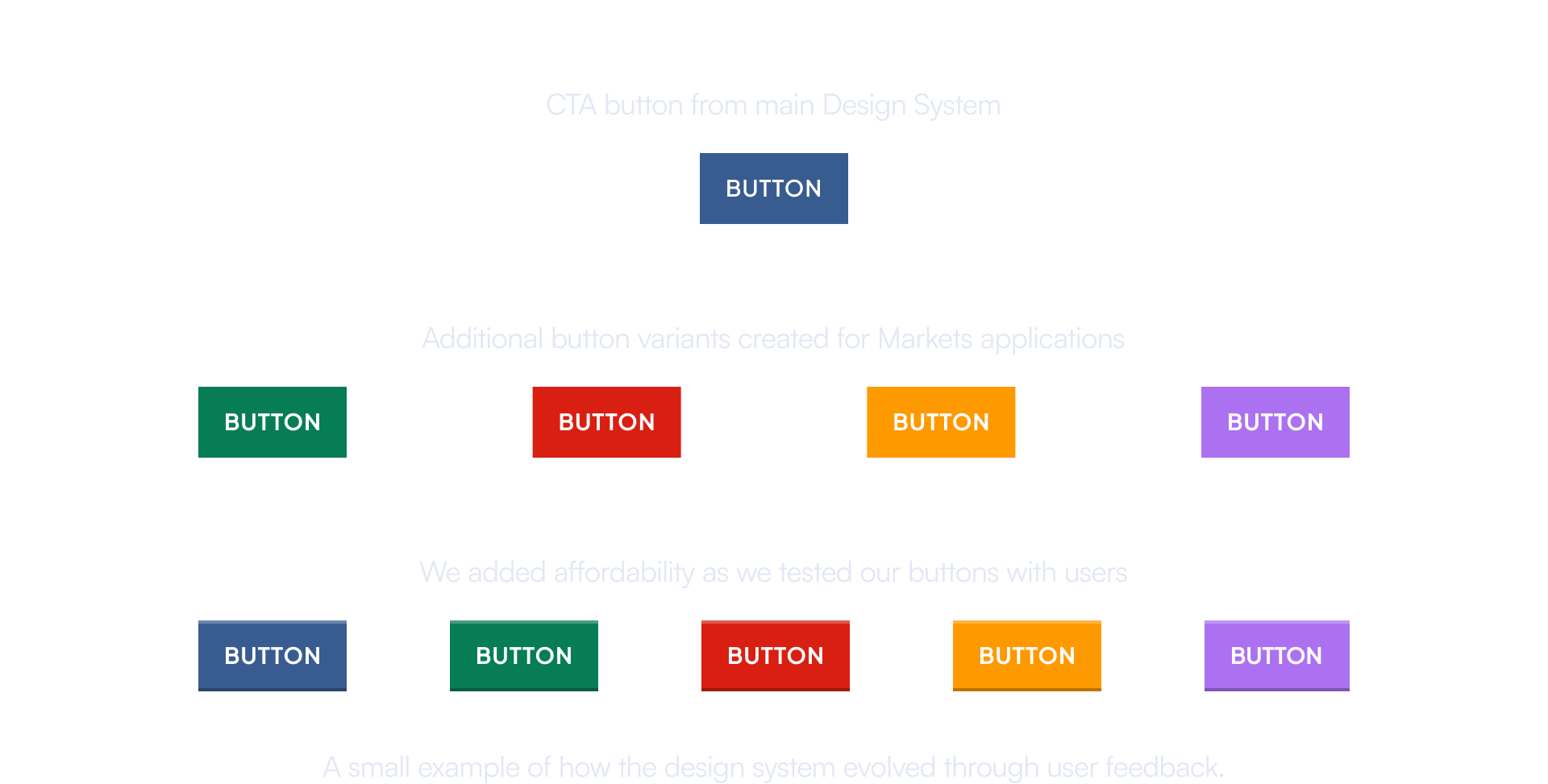
Why communication mattered as much as craft
To make the migration both stable and scalable, I audited and translated the existing Sketch libraries into structured, maintainable Figma components. Stress-tested components across a range of real product layouts, dashboards, blotters, order tickets, to reveal usability and scalability gaps. Refined naming conventions, constraints, and variants to make components easier for teams to adopt and adapt. Created documentation and internal demos showing best-practice use cases for both designers and engineers. Produced an After Effects video to introduce the system globally, communicating its value and driving adoption across business lines.
This mix of craft and communication helped shift the system from a static library to a living design platform that scaled across product teams and regions.
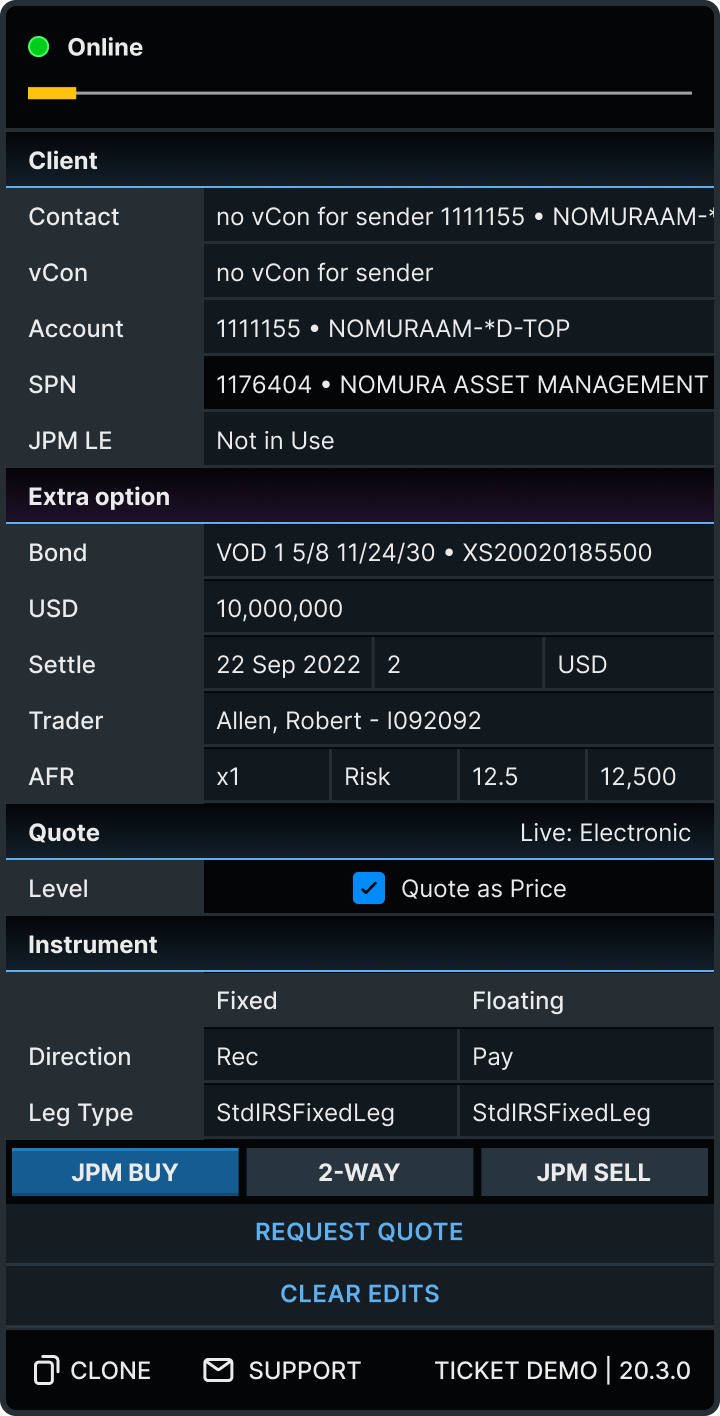
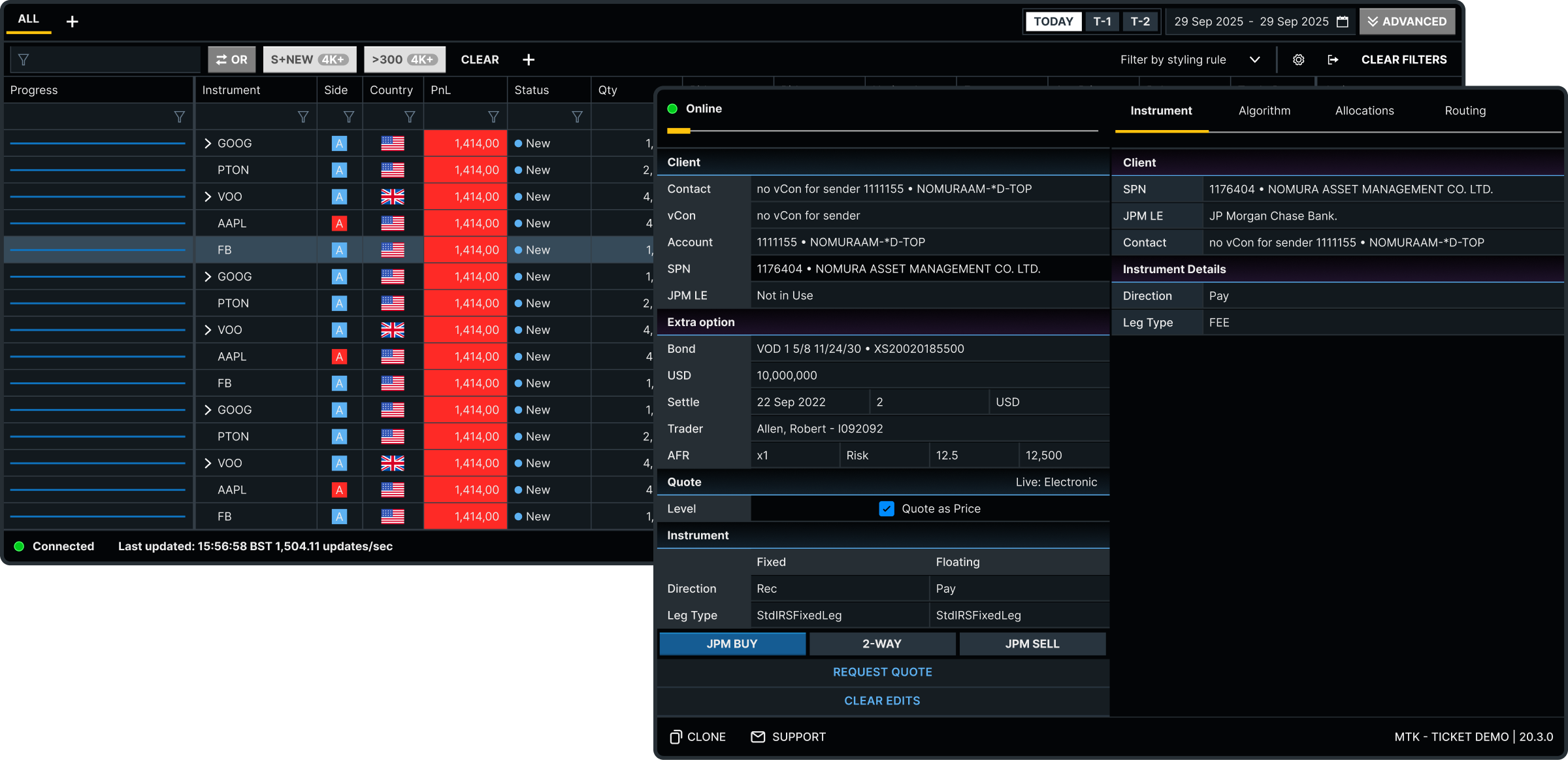
Example of a trade ticket
The result
The Figma-based design system became the single source of truth for Markets UI, adopted by multiple product teams across trading, sales, and operations.
Components were more flexible, easier to maintain, and better aligned with engineering delivery standards, allowing teams to move faster without compromising quality.
The documentation and launch video increased visibility and understanding of the system's purpose, helping teams embrace a unified design language across the firm and collaborate more effectively.
Today, the system supports 166+ products and tools, serving 1,100+ business users and 430+ developers across Global Markets, proof that clear communication scales just as much as design craft.
It's about relationship and trust. Not just deliverables.
This project reinforced that maturity in design systems isn't just about components, it's about trust.
Migrating to a new toolset was as much a cultural challenge as it was a technical one. It taught me how to balance precision, clarity, and advocacy within a global organisation, and how to build alignment across teams that speak different languages of craft.
It also deepened my appreciation for design ops and communication, reminding me that great systems don't just scale through consistency, but through storytelling that people can believe in.