Metro Bank.
Revolutionising account opening.
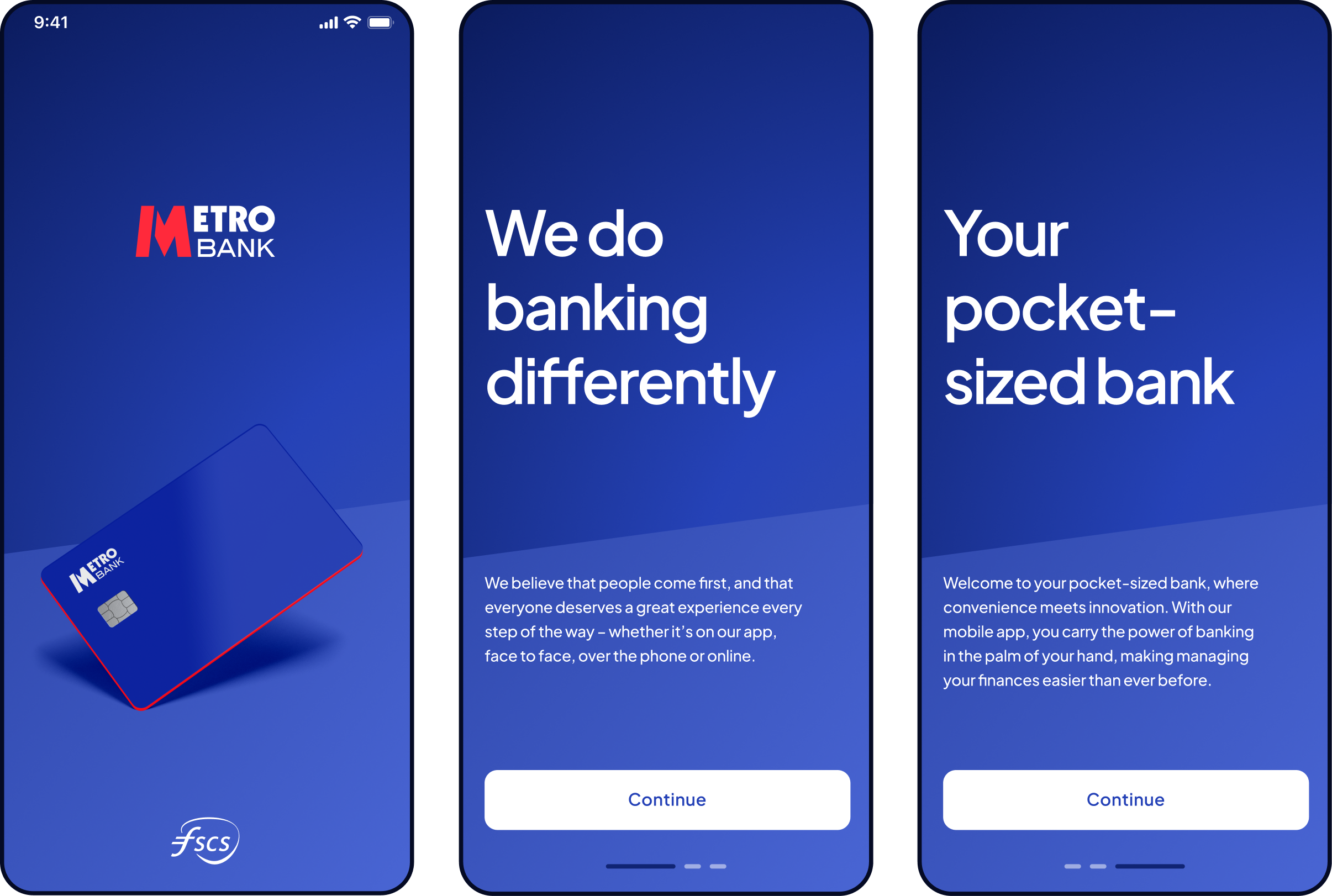
The problem
Metro Bank account opening was stuck in a pre-digital era. It required an in-person branch visit and took 24 hours to complete. This at a time when neo-banks were opening accounts within minutes on a smartphone.
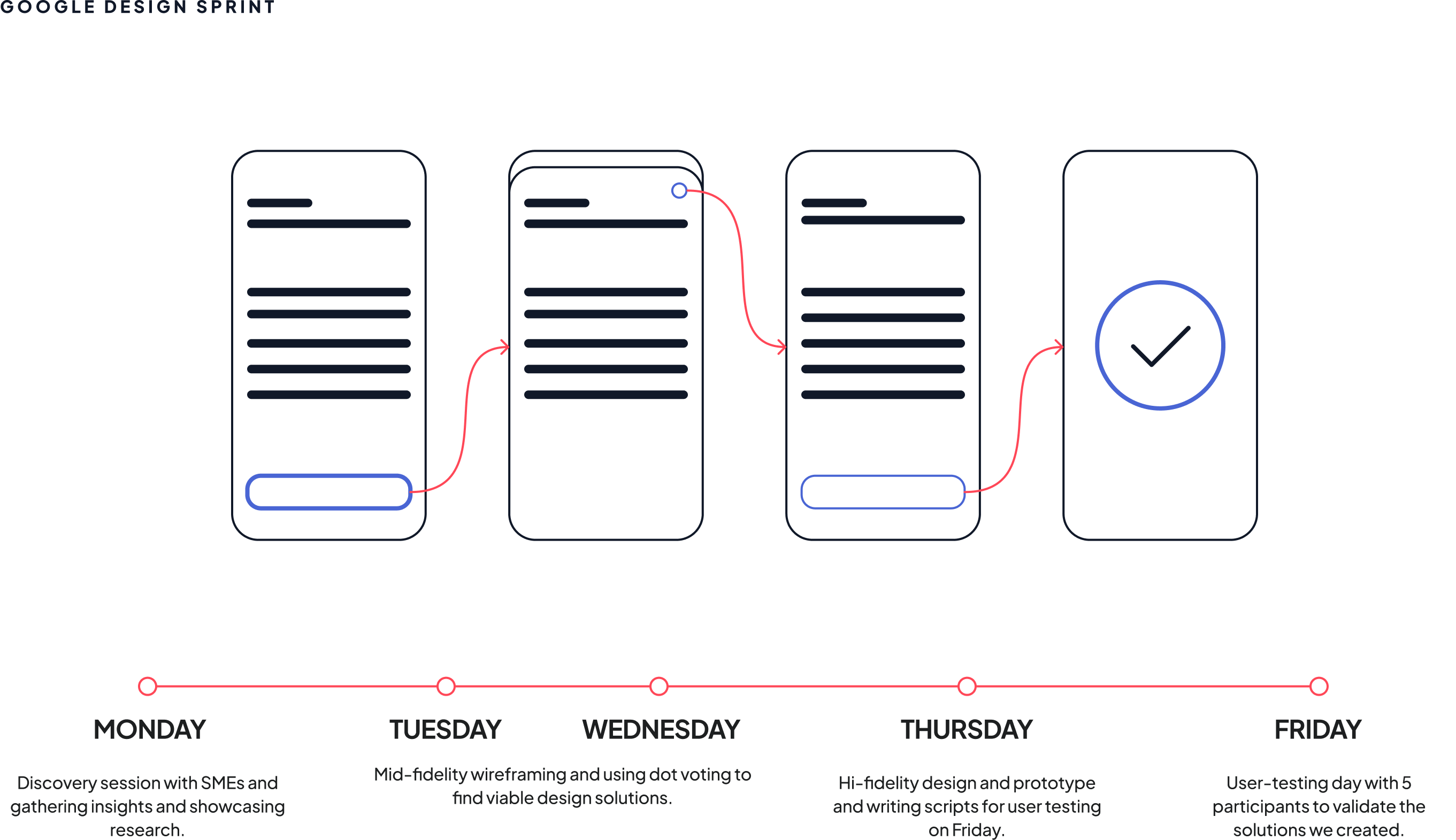
The gap was visible and the solution was obvious. So, Michael (Lead UX Designer) and I (Lead UI Designer) proposed a five-day Google Design Sprint to showcase how design could build a proven prototype in 5 days.
The goal was twofold: prototype a fully mobile compliant onboarding journey and demonstrate that we could achieve it at a speed that the bank hadn't seen before.
What we did
This occurred during COVID so the whole team was working remotely.
Monday — Discovery
SME interviews, App Store reviews, 11FS competitor research.
Tuesday and Wednesday
Sketching, dot voting and decision-making.
Thursday — Building
High-fidelity prototype in Figma, copy written in real-time, fully remote collaboration.
Friday — Testing
Moderated testing with 5 participants.
The sprint brought non-designers into our process for the first time. Everyone had a voice in a format that they could contribute at speed.
What we built
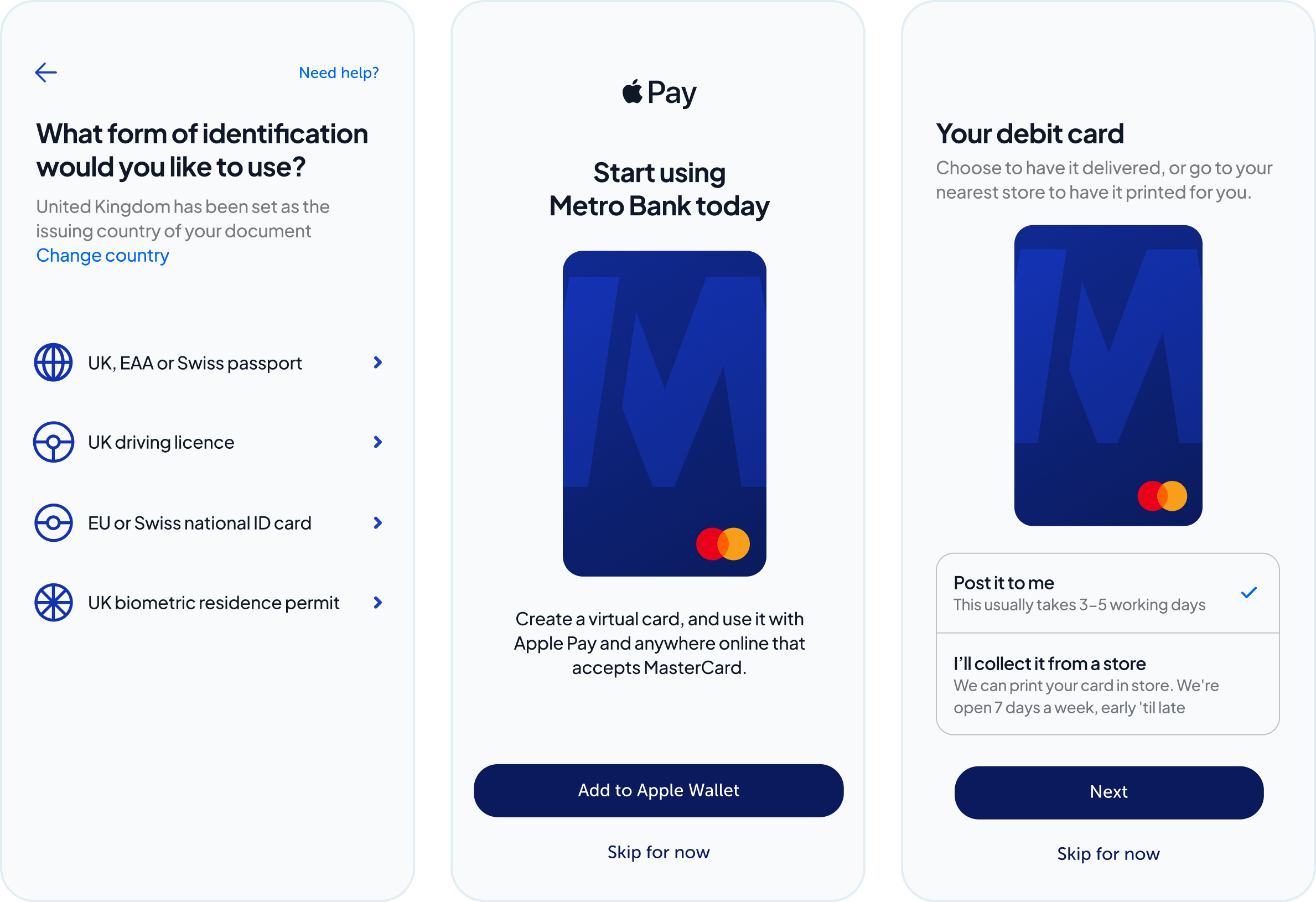
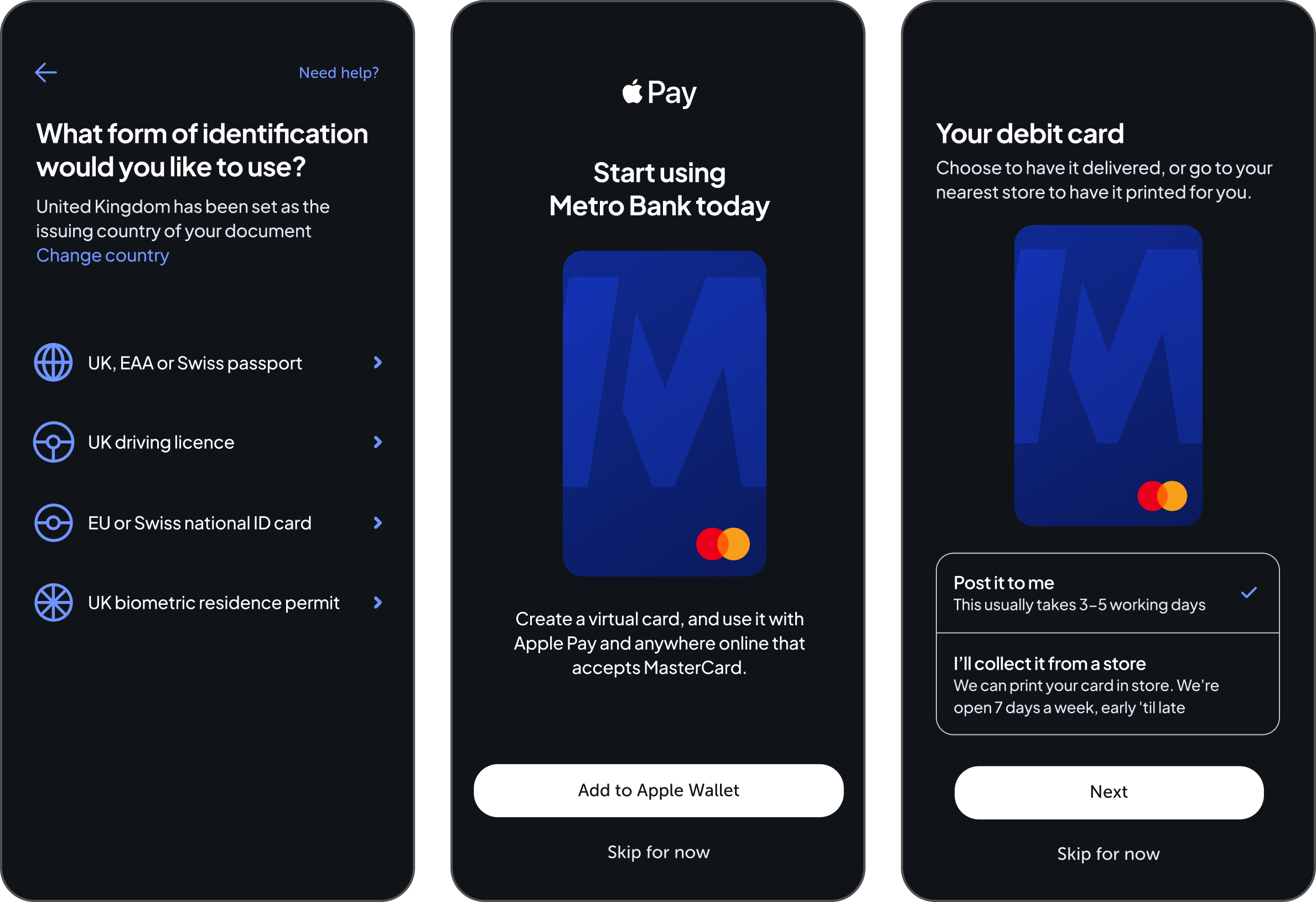
A fully mobile account opening journey. From welcome screens to identity verification and liveness checks via video selfie, virtual card setup with Apple Pay, and debit card delivery options. No branch visit required.
Our journey was compared to Monzo and Revolut in terms of speed and ease of use.
The outcome
Our prototype proved that the standard 24 hour account opening could be replaced with a 10 minute digital journey. This was validated with five participants through user-testing.
The project didn't progress beyond the sprint. I left Metro Bank shortly after, so I can't speak to what happened next, but what we proved in five days changed how the business saw design.
What it connected to
The fully remote design sprint was a practical application of my Online Workshop Facilitation training through Hyper Island, bringing value back to the business that invested in me.